Recordings from children’s sports events and school functions: protecting minors’ image rights

Mateusz Zimoch
Published: 5/6/2026
Updated: 5/19/2026

Visual data anonymization means preparing a photo or video so that the person shown cannot be identified, or so that the risk of identification is significantly reduced. In practice, for recordings from children’s sports events and school activities, this most often means blurring faces and, in certain situations, also blurring license plates visible in a car park or in the background. This is currently one of the most sensitive areas for event organizers, schools, sports clubs, and communications teams.

This topic raises strong emotions because it involves children, sport, parental pride, and the need to document achievements. At the same time, publishing a photo or video from a sports hall, playing field, or school corridor may fall within the scope of personal data protection and image rights. When minors are involved, organizations usually take a more cautious approach than they would with content featuring adults. That follows both from the general principles of the GDPR and from its emphasis on the need for special protection for children [1].

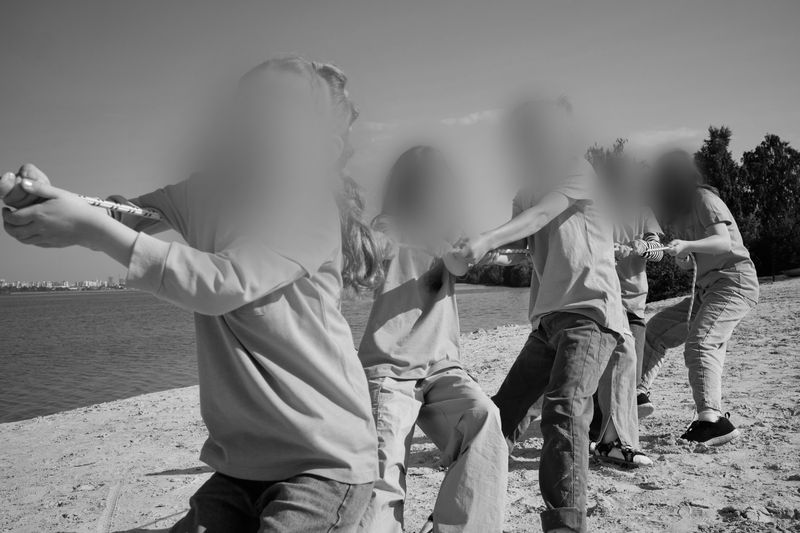
Group of people engaged in a tug-of-war on a sandy beach near a body of water, with blurred faces and trees in the background.

Why a child’s image in a photo or video requires extra caution

A photo or recording showing a child’s face will generally qualify as personal data if the child can be identified directly or indirectly. This approach follows from the GDPR definition of personal data and the well-established view that a person’s image counts as data whenever identification is realistically possible [1][2]. For schools and sports clubs, this means that publishing event footage is not merely an organizational or promotional matter.

With children, the risk is higher for three reasons. First, content is often posted on social media and then shared further beyond the organizer’s control. Second, a video showing a race number, school name, and the child’s face can make it easy to connect the dots. Third, a child does not always understand the consequences of publication, which is why the GDPR stresses the need for special protection for minors [1].

At this point, it is worth distinguishing between two situations. One is recording an event for internal or administrative purposes. The other is publishing a photo or video on a school website, on social media, in promotional materials, or in the press. It is publication that most often requires a separate risk assessment and a clear legal basis.

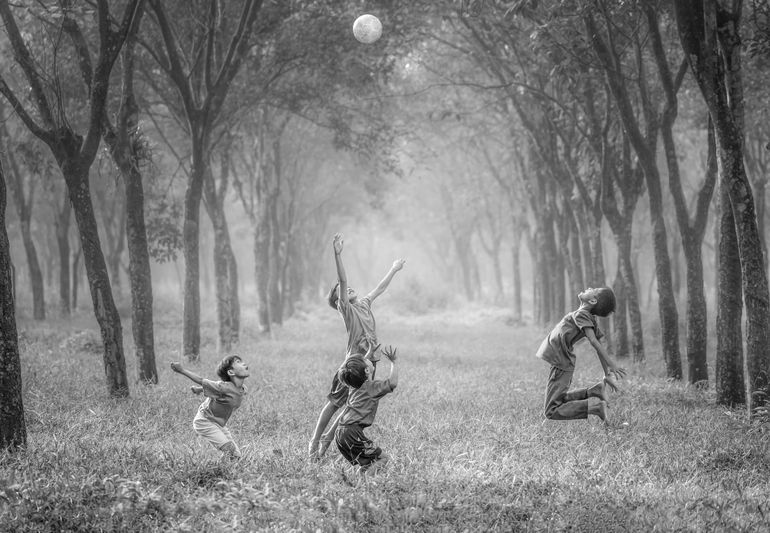
Four children joyfully jumping to catch a ball in a misty, tree-lined path. Black and white photograph capturing a moment of play.

Article 8 GDPR and photos or videos of children: what it actually regulates

Article 8 of the GDPR concerns a child’s consent in the context of information society services offered directly to a child [1]. It was not drafted specifically for school photo galleries or tournament coverage. Even so, it remains an important reference point because it reflects the broader logic of EU law: children require special protection, and an organization should not assume that a minor can independently and effectively understand the consequences of digital distribution of their image.

In compliance practice, this usually translates into a cautious operational rule: if a photo or video is to be published and allows a child to be recognized, organizations often rely on parental or legal guardian consent, or assess whether the material falls within statutory exceptions relating to the publication of a person’s image. This is not legal advice, but it is a common way of reducing risk.

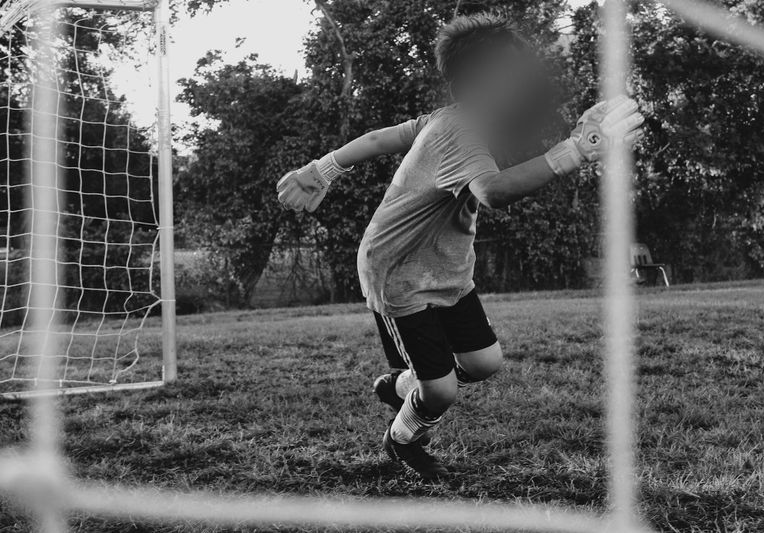
Young soccer goalie mid-action in front of a goal, wearing gloves and sportswear, with trees in the background. Black and white image.

When a parent records their child’s match: can it be published?

A parent recording a match for personal use may fall within the purely personal or household sphere. The issue usually begins at the point of publication. When a video is uploaded to an open social media platform, a school channel, a club’s promotional group, or a sponsored post, it stops being just a private keepsake. At that point, the question is no longer only about personal data, but also about the publication of a child’s image.

The safest practical approach is usually this: if a recording shows identifiable children and the material is intended for broad publication, the organizer or publisher should check whether they have an appropriate legal basis and whether the scope of the footage is not too broad. If the promotional purpose cannot reasonably be achieved without showing faces, visual data anonymization becomes a sensible solution, especially face blurring.

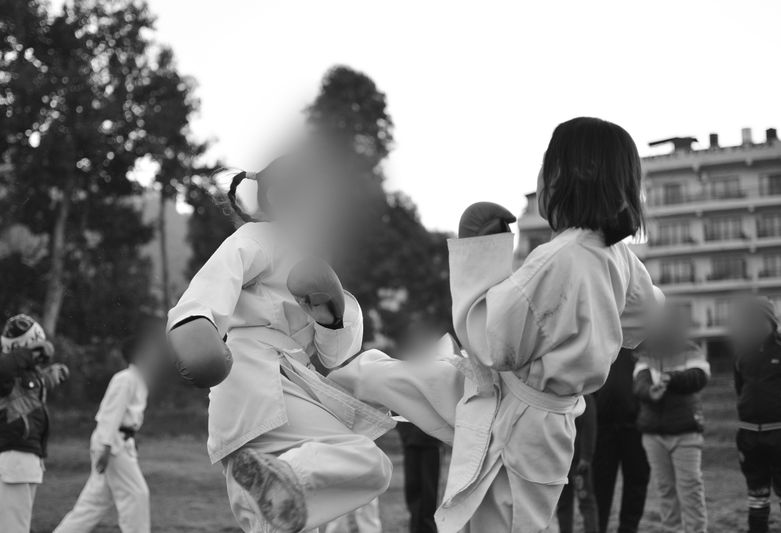
Two kids in martial arts uniforms practice sparring outdoors, surrounded by onlookers and trees, in a black and white photo.

In practice, organizers often ask whether every publication from children’s sports events requires consent. The answer is not always the same, but it is important to remember that three exceptions are commonly cited to the requirement to obtain permission to publish a person’s image, and they should be interpreted narrowly.

  • the person is widely known, and the image was captured in connection with the performance of public, social, or professional functions,
  • the person’s image is only a detail of a larger whole, such as a gathering, landscape, or public event,
  • the person received agreed payment for posing, unless expressly stated otherwise.

For children’s sporting events, the second exception is the one most often considered. However, it does not apply automatically. If the camera focuses on one child, freezes the frame, or shows a close-up of the face and team number, it is difficult to argue that the child is merely a neutral part of a wider scene. If, on the other hand, the footage shows a wide shot of the stands or the entire sports hall without highlighting one individual, the risk is usually lower. Still, every situation depends on context.

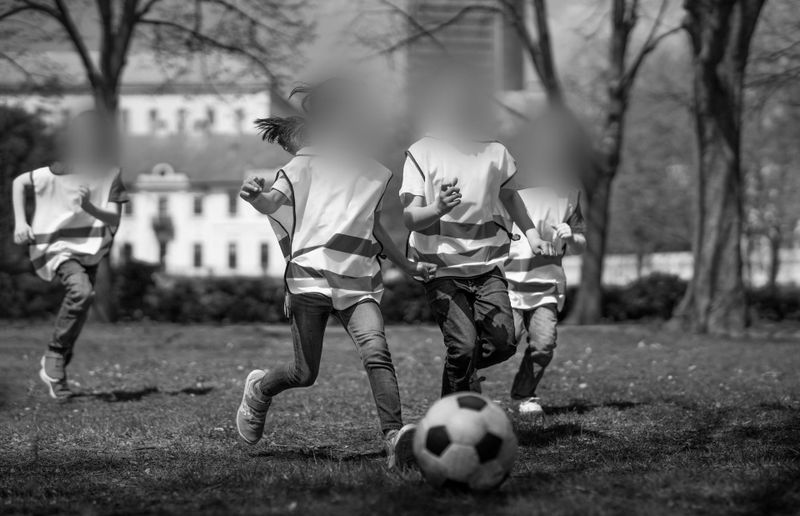
Children playing soccer on a grassy field, wearing striped jerseys. The scene is in black and white, with blurred faces and trees in the background.

How schools and sports clubs should handle footage from the stands and gymnasiums

Good practice starts before the event. An organization should decide why it is recording or photographing in the first place. If the goal is event coverage, it makes sense to plan wide shots from the start, avoid unnecessary close-ups of children’s faces, and limit storage periods. If the goal is promotion, a stricter assessment of the scope of publication is needed.

In day-to-day practice, four steps work well. First, separate keepsake materials from materials intended for publication. Second, assess whether the child is the main subject of the frame or merely part of a larger scene. Third, apply face blurring to higher-risk material. Fourth, limit publication to what is genuinely necessary.

That is why some organizations implement Gallio PRO to prepare content before publication. In this context, what matters is that the software automatically blurs only faces and license plates, rather than entire bodies, and it does not perform real-time anonymization or live video stream anonymization.

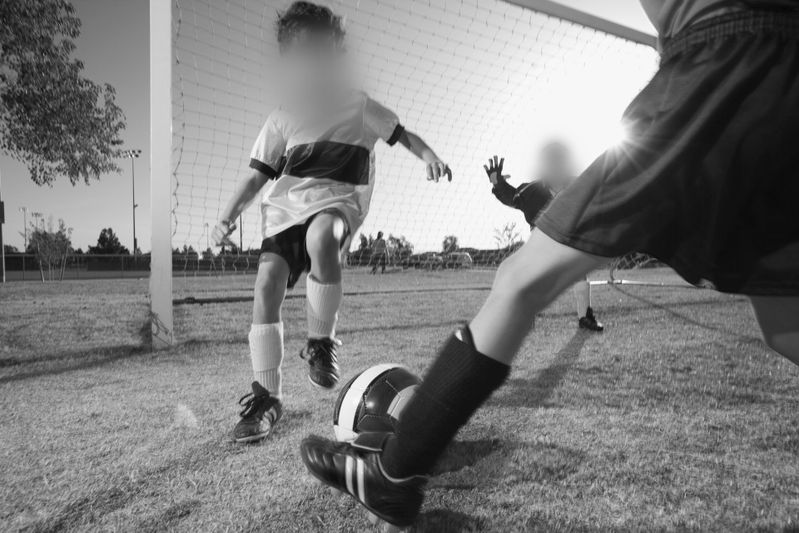
Kids playing soccer, one kicking a ball toward the goal as a goalie moves to block. Sunlight casts long shadows on the grassy field.

Face blurring and license plate blurring: when they make sense

Face blurring is often the most proportionate safeguard when publishing photos and videos featuring children. It preserves the context of the event, the sporting emotion, and the informational value, while reducing the ability to identify participants. For schools and clubs, it is often a better solution than either giving up publication entirely or publishing without any modification.

License plate blurring becomes relevant when cars belonging to parents, teachers, or guests appear in the background of a photo or video. In Poland, whether license plates qualify as personal data depends on the context and on whether they can be linked to a specific person. There is no universal rule that blurring them is always mandatory under national law or EU standards. From the standpoint of cautious publishing practice, however, many organizations still choose to blur them.

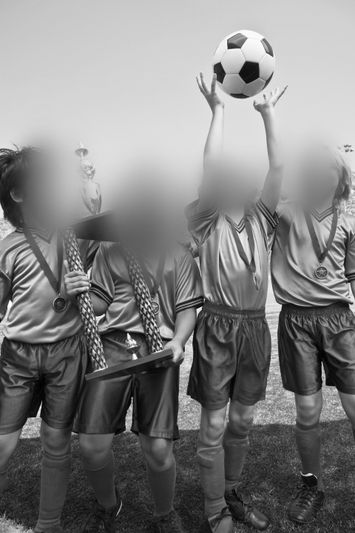
Youth soccer team celebrating with a trophy and medals. One player holds a soccer ball aloft, expressing joy and achievement. Black and white image.

Decision table: how to assess material before publication

Situation

Risk level

Typical organizational approach

Wide shot of a sports hall, no facial close-ups, children shown as part of the event

Lower, but context-dependent

Assess whether the image is merely part of a broader scene, and limit descriptions and metadata

Close-up of a specific child during a race, jump, or award ceremony

High

Usually consent or no publication, with face blurring as a possible alternative

Footage from the stands showing the faces of children and parents

Medium to high

Select shots carefully, shorten the material, and blur identifiable faces

Team photo published on social media

High

Assess the legal basis in advance, often with a cautious approach involving face anonymization

Recording showing the car park next to a school or sports hall

Medium

Consider license plate blurring before publication

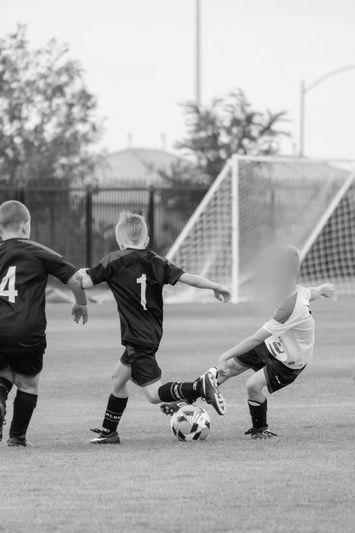
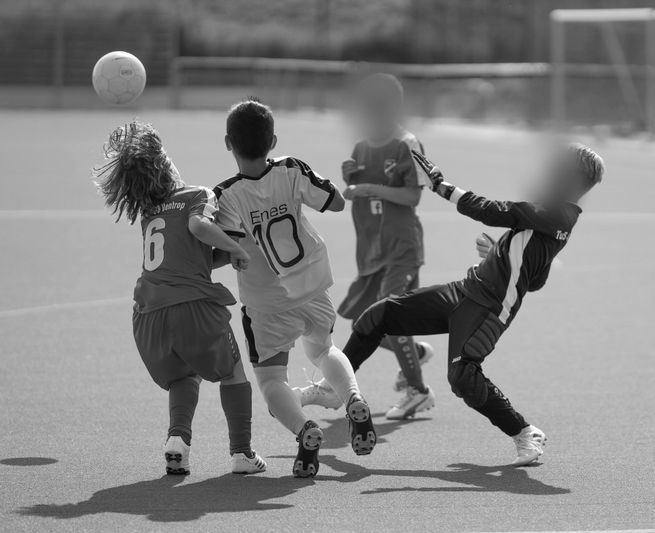
Black and white image of young boys playing soccer, one in white kicking the ball as two opponents in black jerseys attempt to block.

What are the limits of automatic anonymization?

When choosing a tool, it is best to avoid unrealistic expectations. Software of this kind does not solve every problem with a single click. In the case of Gallio PRO, automatic detection covers only faces and license plates. It does not automatically detect company logos, tattoos, name tags, documents, or content visible on computer screens. Those elements can be blurred manually using the built-in editor, which is straightforward to use.

This matters especially at school events, where a starting list, a sheet with a surname, a results screen, or a teacher ID badge may appear in the background. Automation helps, but it does not replace a quick review of the material before publication. Once such a workflow is in place, a sensible next step may be to download the free demo and see how the tool handles your own content.

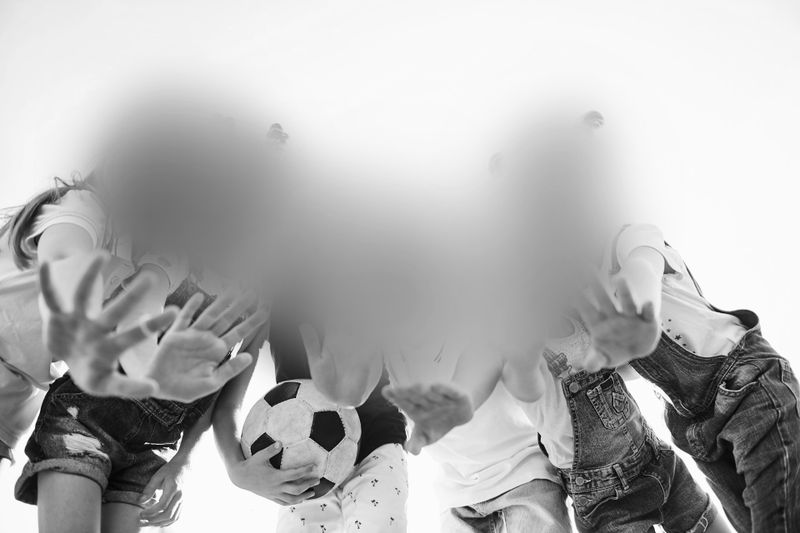
Group of children standing in a circle, viewed from below, holding a soccer ball. Their faces are intentionally blurred. Black and white image.

On-premise software and no logs containing detection data

For schools, public bodies, and larger sports clubs, it is not only the blurring itself that matters, but also how files are handled. On-premise software means an organization can process content within its own environment, without creating additional risk by sending recordings to multiple external services. This can be particularly important for materials involving children.

It is also worth paying attention to logging. Gallio PRO does not store logs containing detection data or personal data. It also does not collect logs containing sensitive data. For compliance teams, this is an important part of tool assessment because it reduces secondary processing footprints.

If an organization is planning a larger deployment, needs local processing in its own infrastructure, or has a specific compliance scenario, the most reasonable step is to get in touch and discuss the intended use model before making a purchase.

Children playing soccer on a field, two players in red and two in white and black jerseys, actively competing for the ball.

The most common mistake organizers make: confusing event coverage with promotion

Most problems arise when a single photo or video is expected to serve several functions at once. Event coverage, a keepsake for parents, a school promotion post, recruitment advertising for a sports club, and press material are not always the same thing. The further the content moves away from neutral event reporting and toward promotional activity, the harder it usually becomes to justify publication without additional safeguards.

That is why a practice aligned with the data minimization principle is actually quite simple: show the event, rather than spotlighting individual children without a clear need. Limit close-ups. Use anonymization where the material has informational value but participant recognizability is not necessary. With children, that kind of caution is not excessive; it is the standard for responsible publication.

3D black question mark floating against a light gray background.

FAQ - recordings from children’s sports events and school functions
Can a parent post a video from a children’s match on social media?

It depends on the context of the publication. Purely personal use is different from making the material publicly available to a broad audience. If other children are identifiable in the recording, the legal and reputational risk increases.

Can a school upload photos from an assembly or sports event to its website?

It may require a separate assessment. What matters is whether the photo shows a wide event scene or focuses on specific children, and what the purpose of publication is.

Is a general consent form signed at the start of the school year enough?

In practice, organizations often assess whether the consent is sufficiently specific in relation to the purpose and method of publication. Overly broad forms may not resolve every concern.

Is face blurring enough to publish a video from a sporting event?

It often reduces risk significantly, but it does not always solve every issue. You still need to check whether the material contains other identifying elements, such as name signs or a results screen.

Do license plates in a school car park need to be blurred?

In cautious publishing practice, often yes. In Poland, the answer depends on the context and on whether a person can be identified based on the plate, but many organizations still choose license plate blurring to reduce risk.

Can you rely on the argument that a child is just part of the crowd?

Sometimes, yes, but only where the child is genuinely part of a wider scene. A facial close-up or a clear focus on one person usually weakens that argument.

Does Gallio PRO blur everything automatically?

No. Automatic detection covers only faces and license plates. Other elements, such as documents, name tags, tattoos, logos, or content on monitors, require manual blurring in the editor.

References list

  1. Regulation (EU) 2016/679 of the European Parliament and of the Council of 27 April 2016 (GDPR).
  2. Information Commissioner’s Office, guidance on personal data and lawful basis, including materials on images as personal data and consent.
  3. European Data Protection Board, Guidelines 05/2020 on consent under Regulation 2016/679.
  4. Polish Act of 4 February 1994 on Copyright and Related Rights.
  5. Polish Act of 23 April 1964 - Civil Code.
  6. European Data Protection Board, Guidelines 3/2019 on processing personal data through video devices.