Data protection in product photography and e-commerce: when a background with people requires anonymization

Mateusz Zimoch
Published: 5/7/2026

Visual data anonymization in product photography and e-commerce means processing a photo or recording in such a way that people visible in the frame cannot be identified, or that their identification is materially limited. In practice, this most often means face blurring and, in some cases, license plate blurring. These two elements are among the most common risk points when publishing product photos taken in a store, showroom, shopping mall, at trade fairs, or in public spaces.

A question that regularly comes up in e-commerce and marketing teams is very specific: do you need to do anything to a product photo if customers are visible in the background? The answer is: often yes, but not always. The decision depends on whether the people in the background are identifiable, whether they are a primary or secondary element of the publication, what the context of the shot is, and whether the publication can be based on a clear legal basis and a sound compliance practice.

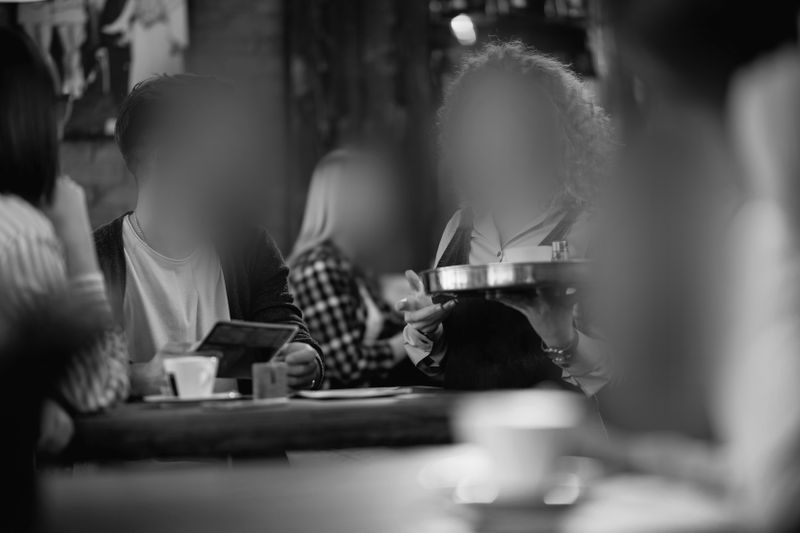
A group of people, with blurred faces, are gathered at a table in a cafe. A server with an apron takes an order, holding a notepad. Black and white image.

When a background with people in a product photo becomes a GDPR issue

Under the GDPR, an image is treated as personal data when a person can be identified without disproportionate effort [1]. This does not apply only to portraits. In an e-commerce context, a clearly visible face, a distinctive profile, a combination of face, clothing, and location, or repeated publication within a campaign may be enough. If a store publishes a photo of a sofa, lamp, or retail display, but customers are clearly visible in the background, the image stops being just a product photo.

In practice, it helps to ask four questions:

  • is the face clearly visible,
  • is the person merely an incidental background element, or do they draw attention,
  • will the photo be widely published, for example in an online store, paid ads, social media, and marketplaces,
  • is there a safer alternative, such as cropping, reshooting, or anonymization.

If the answer to the first two questions points to identifiability, organizations often take a cautious compliance approach and apply face blurring before publication. This is usually simpler and less risky than trying to defend the argument that the person was “only accidentally” captured in the frame.

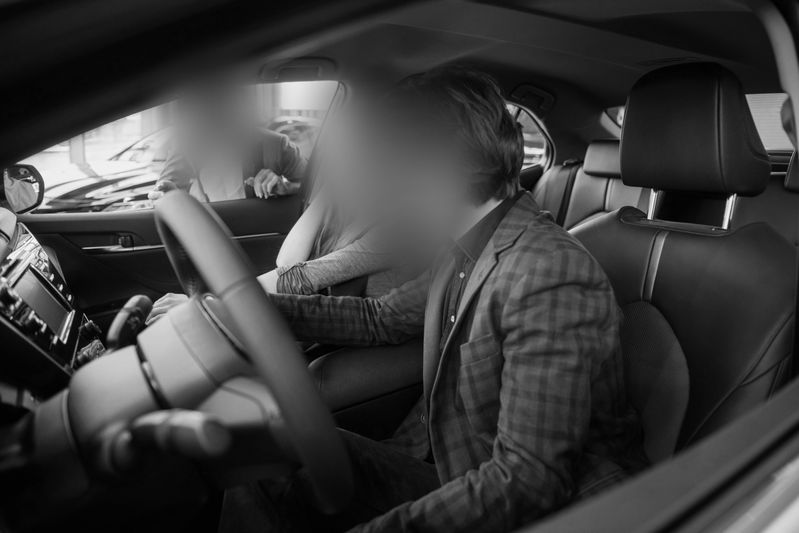
Three people inside a car, two in the front seats and one leaning in from outside, with blurred faces. Black and white image.

Publishing photos with customers in the background: when intervention is usually necessary

The most typical situations include product photos taken in an operating retail store, interior shoots in publicly accessible spaces, promotional videos from the sales floor, and photos from commercial events. If a customer in the background is identifiable, publishing the image without anonymization may infringe not only data protection rules, but also image rights under the Civil Code and the Polish Copyright and Related Rights Act [1][5][6].

In Polish business practice, the need for face anonymization usually stems from the combination of these three legal areas: data protection, protection of personal rights, and rules governing the dissemination of a person’s image. This matters because marketing teams often focus only on the GDPR and overlook image rights rules.

At the same time, the obligation to obtain permission to publish someone’s image has several classic statutory exceptions. First, it applies to a well-known person if the image was captured in connection with the performance of public functions, especially political, social, or professional ones. Second, where the person’s image is merely a detail of a larger whole, such as a gathering, landscape, or public event. Third, where the person received agreed payment for posing, unless expressly reserved otherwise. These exceptions should be interpreted cautiously. Product photography in a store with a customer in the background rarely falls within them in an obvious way.

Three people inside a car, two in the front seats and one leaning in from outside, with blurred faces. Black and white image.

Practical decision criteria for product photographers and e-commerce managers

In day-to-day work, a simple publication test works best. If a person in the background is identifiable and the image is intended to support product sales or promotion, the safer practice is to anonymize the face or avoid using the shot. If the person is very small, turned away, out of focus, and cannot realistically be identified, the risk is lower. If the frame shows a crowd at a public event and no specific person is highlighted, the exception for a broader public scene may be considered. This assessment is always context-dependent.

Situation

Identification risk

Typical compliance approach

Product photo in a store, customer in the background with a clearly visible face

High

Face blurring or reshooting

Storefront photo, people far in the background, out of focus

Low to medium

Context-based assessment, often no intervention

Promotional video from the sales floor, customers passing through the frame

High

Frame review and anonymization of identifiable faces

Coverage of a public trade fair, crowd as the background of the scene

Medium

Assess the “detail of a larger whole” exception, without automatic assumptions

Shoot with a model or extra paid for the campaign

Controlled

Verify consents and the scope of image use

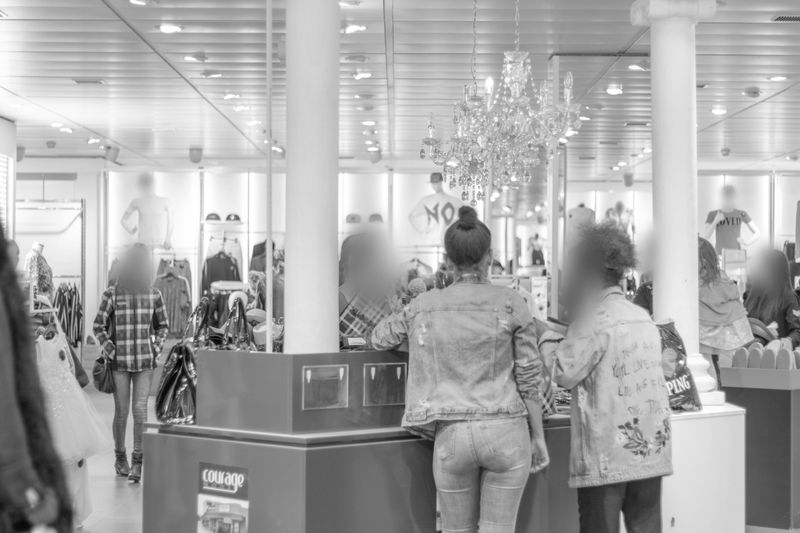
People shopping in a brightly lit clothing store with a chandelier, racks filled with clothes, and a checkout counter.

Face blurring and license plate blurring: what you actually need to check

Visual data anonymization in marketing materials most often means blurring faces and vehicle license plates. In the case of faces, the issue is relatively straightforward: if the face identifies a person or could allow identification, face blurring is a standard risk-reduction measure.

For license plates, the situation is more complex. There is no single rule that, in Western European countries, license plate blurring is always mandatory under national law. In data protection practice and online publication workflows, however, a precautionary approach is often used, especially when a vehicle may be linked to a specific person. In Poland, the issue is not entirely clear either. On the one hand, a license plate may under certain circumstances lead indirectly to identification of an individual; on the other hand, Polish case law has included positions according to which a license plate alone does not always constitute personal data. For that reason, in cross-border publications and broadly targeted campaigns, license plate blurring is usually the safer practice, especially when the vehicle may be linked to a specific person. Gallio PRO’s internal guidance emphasizes precisely this kind of precautionary approach.

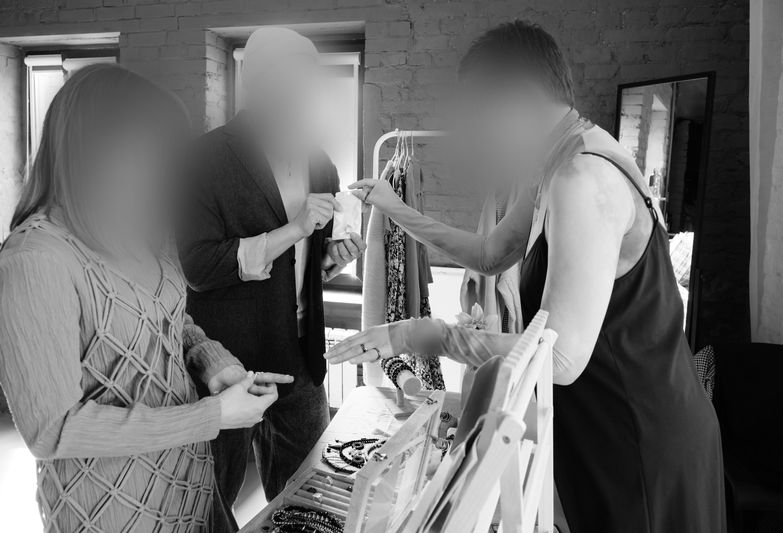
Three people engage with jewelry displayed on a table in a well-lit room with brick walls.

How to organize the publication process for photos and videos in e-commerce

A good process does not start with the tool, but with content selection. First, it is worth filtering out shots in which customers are centrally visible. Next, check whether faces and license plates are identifiable. Then decide whether cropping, reshooting, or anonymization is the better option. Only at the final stage should the material move to publication.

At this stage, software that runs locally can be especially useful, particularly when an organization wants to limit data exposure and retain control over files. Gallio PRO is a solution for anonymizing photos and recordings that automatically blurs only faces and license plates.

This limitation should be stated clearly because it matters for compliance. The system does not automatically detect company logos, tattoos, name badges, documents, or content displayed on monitor screens. If such elements are visible in the background, they require manual assessment and, if necessary, concealment in an editor. This is particularly important in product shoots conducted in stores, customer service offices, and pickup points, where employee identifiers, printed materials, or checkout screens can easily be captured by accident.

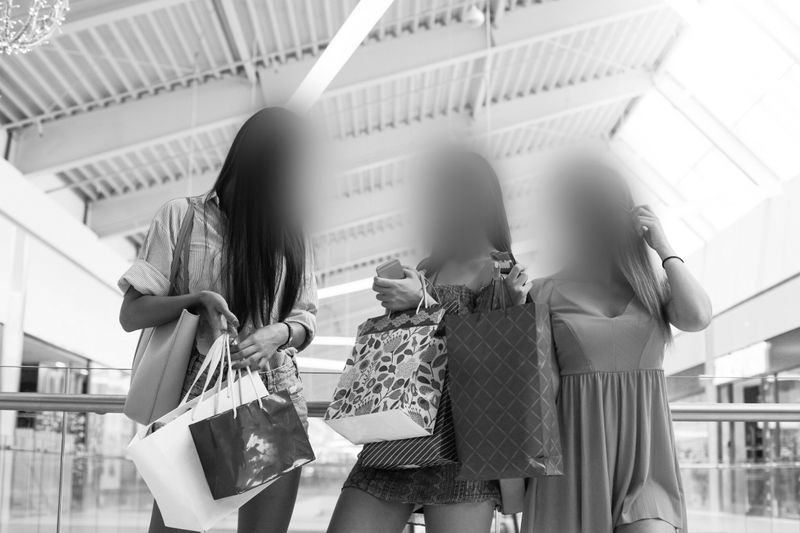
Three people in a mall holding shopping bags, faces blurred, standing under high ceilings with natural light. Black and white image.

On-premise software and control over visual material

For some organizations, not only the blurring itself but also the processing architecture matters. On-premise software is often chosen where security policies require local file processing or where the material includes large volumes of images from stores, public facilities, or warehouses. This model can simplify internal procedures, although the specific assessment depends on the technical environment and the organization’s policies.

Logs also matter. According to the manufacturer’s declaration, Gallio PRO does not store logs containing face and license plate detection data, nor logs containing personal data or special category data. This is a valuable feature in workflows where the compliance team asks not only about the anonymization result, but also about the trace left by the tool itself.

If your team wants to validate this workflow on its own materials, you can try the demo and test the process on product photos and short video materials before moving into production.

Blurry black and white image of people sitting and talking in a cafe, with a server carrying a tray.

What not to assume when anonymizing photos and video

The most common mistake is assuming that if a photo is about a product, people in the background do not matter. That assumption is risky. The second mistake is equating blur with full anonymization in every case. If a person remains recognizable from their silhouette, the context of the location, or a series of publications, the blurring technique alone may require additional assessment. The third mistake is confusing automation with full coverage of all categories of visual risk.

It is also worth stating the technological limits clearly. Gallio PRO does not blur entire silhouettes, does not perform real-time anonymization, and is not intended for anonymizing live video streams. Automatic detection covers only faces and license plates. Other elements can be concealed manually in a simple editor.

Black and white image of a cozy coffee shop with two people behind the counter, surrounded by coffee-making equipment and shelves with merchandise.

When an individual case assessment is needed

Some scenarios are too specific to rely solely on general practice. This applies, for example, to deployments for retail chains, materials produced simultaneously for multiple countries, publications combining monitoring and marketing, or environments that require local installation and a strict permission model. In such cases, it is sensible to reach out to the team and discuss implementation requirements and the best way to organize the process.

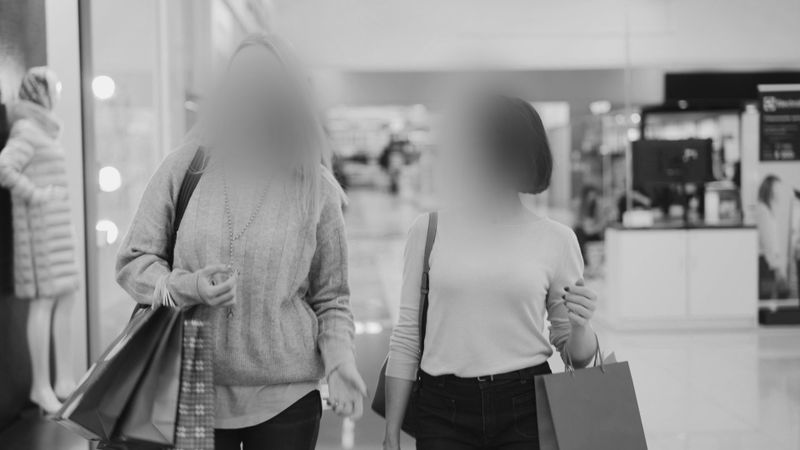
Two people with blurred faces, holding shopping bags, walk through a mall. Mannequins in the background display clothing. Black and white image.

The shortest answer to the question: do you need to do anything to a product photo if customers are visible in the background?

If a customer in the background is identifiable and the photo is intended for an online store, campaign, or promotional communication, then in most cases yes — the photo should be changed, cropped, or processed with face blurring. If a vehicle and its license plate are also visible, a cautious compliance approach in broader publications will usually favor license plate blurring as well. If the person in the background is not identifiable, or is genuinely only an incidental element of a wide public scene, intervention may not always be necessary. The assessment always depends on context, but for e-commerce the safer standard is simple: an identifiable person in the background means action is needed.

White candles arranged in the shape of a question mark on a black background.

FAQ - data protection in product photography and e-commerce
Does every product photo with a customer in the background require anonymization?

No. If the person is not identifiable and is only a marginal element of the frame, the risk may be low. If the face is clearly visible or the person draws attention, anonymization is usually the safer publishing practice.

Is consent to enter the store or the venue’s terms and conditions enough?

Usually not. This kind of notice does not automatically resolve the issue of publishing an identifiable image in marketing materials. In commercial publication, a separate assessment is needed of the legal basis for the activity and the rules governing the use of the image.

Can you publish a photo with a customer’s face if they are only in the background?

This can be considered only where the person is genuinely not identifiable or where one of the exceptions relating to image rights applies. In product photography and e-commerce, such situations are not the norm, which is why teams more often use face blurring or choose a different shot.

Do license plates always have to be blurred?

There is no single answer for all jurisdictions. Nor is there one universal rule for the whole of Western Europe. In publishing practice, however, a precautionary approach is common, and in Poland the legal and case-law position remains less clear-cut than it is for faces. From a compliance and cross-border publishing perspective, license plate blurring often remains the safest practice.

Does Gallio PRO automatically detect logos, tattoos, and documents in the background?

No. Automatic detection covers only faces and license plates. Logos, tattoos, name badges, documents, and monitor screens require manual review and, if necessary, manual editing.

Does Gallio PRO anonymize a live camera feed?

No. The software does not perform real-time anonymization or anonymization of video streams. It is designed to work with saved photos and video files.

Does the tool store logs containing detection data?

According to the manufacturer’s declaration, it does not store logs containing face and license plate detection data, nor logs containing personal data or special category data.

References list

  1. Regulation (EU) 2016/679 of the European Parliament and of the Council of 27 April 2016 (GDPR).
  2. European Data Protection Board, Guidelines 3/2019 on processing of personal data through video devices.
  3. Information Commissioner's Office, UK GDPR guidance on personal data and lawful basis.
  4. Information Commissioner's Office, guidance on video surveillance including CCTV.
  5. Act of 23 April 1964 - Civil Code.
  6. Act of 4 February 1994 on Copyright and Related Rights.
  7. Data Protection Act 2018, United Kingdom.